

Taiwanese Red Oolong Tea
Heavily fermented oolong tea from Taitung County, Taiwan
Origin: Taiwan
4.140 Ft – 13.990 Ft

Teaware:
150–200 ml clay teapot
or gaiwan

Amount of tea Leaves:
3–4g

Water temperature:
90–95°C

Steep time:
First infusion 15 seconds, then +10 seconds
per subsequent infusion
Description
Of the six major tea categories, Taiwan’s strength lies in oolong — with well-known styles ranging from the lightly oxidized Pouchong and High Mountain tea to the richer Dong Ding and Tieguanyin, as well as Oriental Beauty. Red oolong belongs to this oolong family, but at the highest level of oxidation (around 80%). It is a “new generation” of Taiwanese oolong, developed in Taitung in 2008, shaped to the local terroir and craftsmanship. It applies the withering and roasting used in oolong-making together with the heavy rolling and full oxidation used in black tea production. The result is a tea that carries both the aroma of oolong and the sweetness and long finish of black tea.
Every stage of the process shapes the final result. By adjusting variables such as withering time, mixing, rolling pressure, and roasting strategy, tea makers can produce strikingly different red oolong flavors.
Preparation
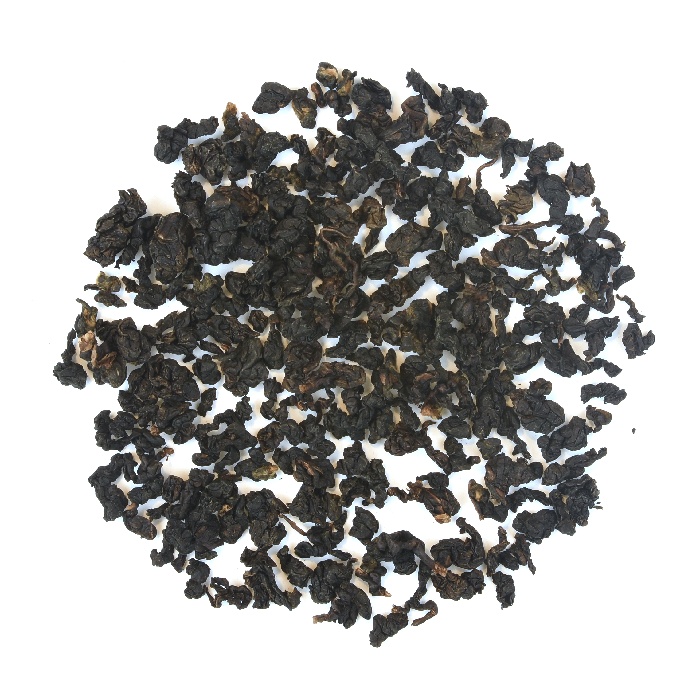
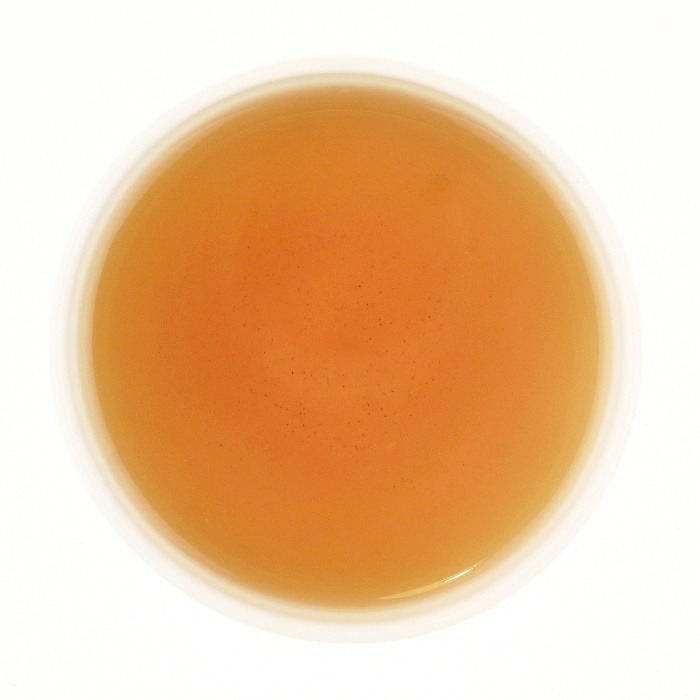
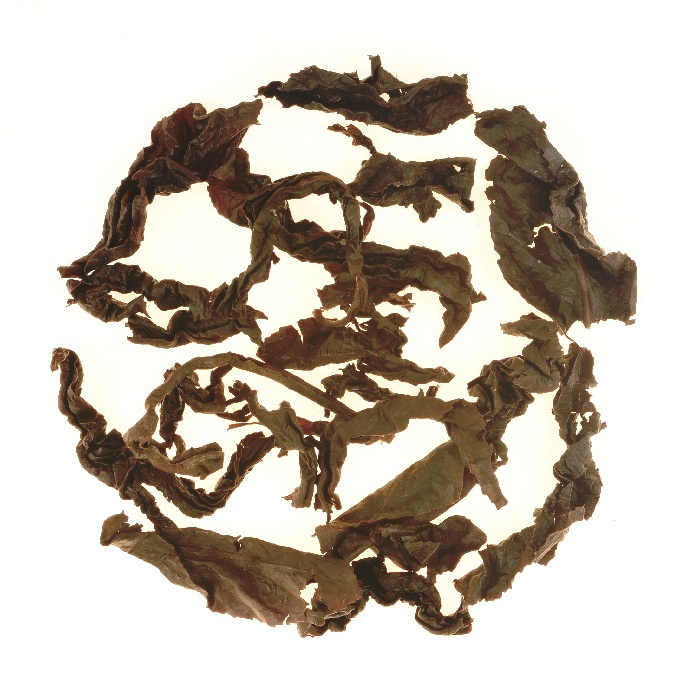
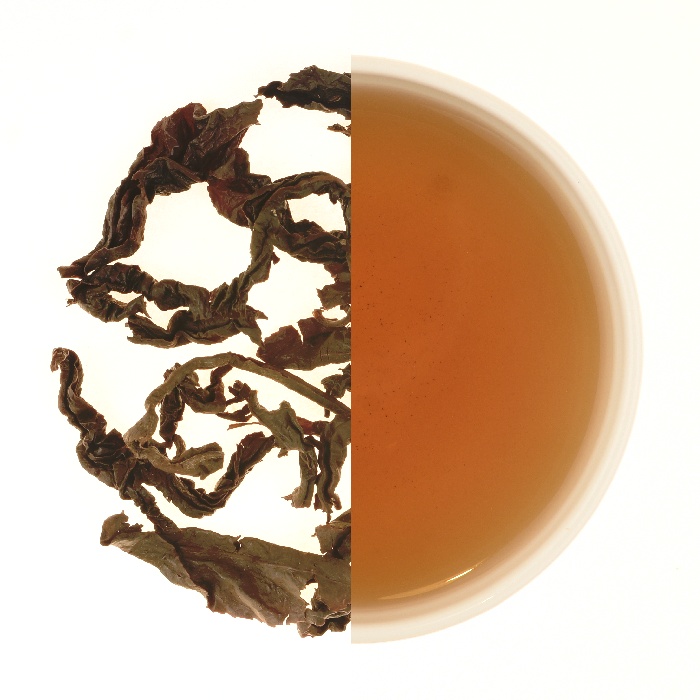
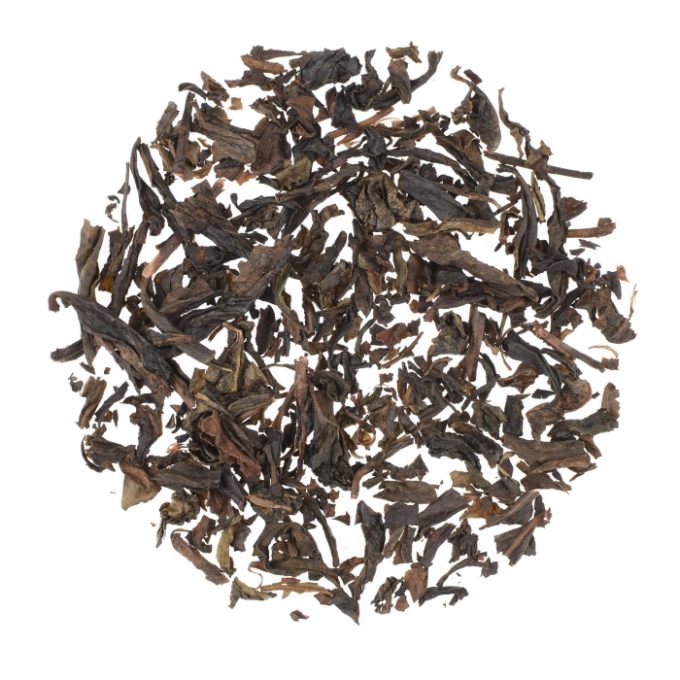
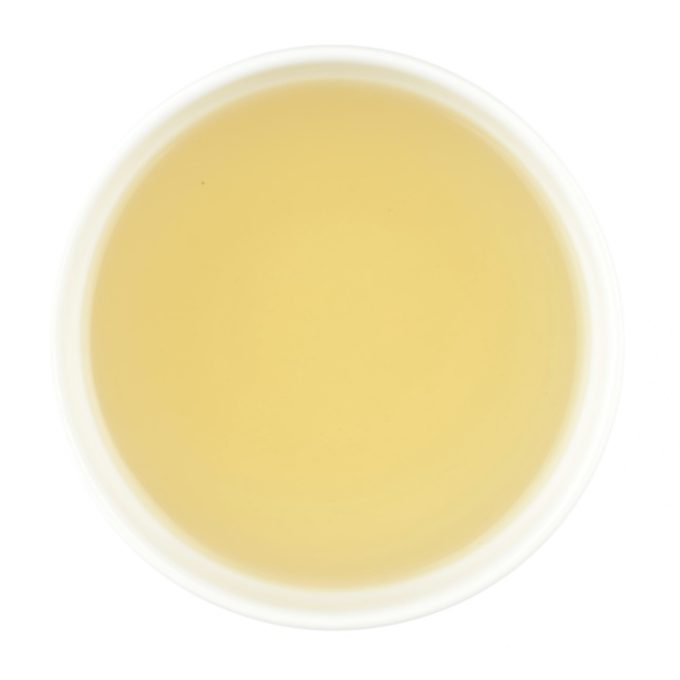
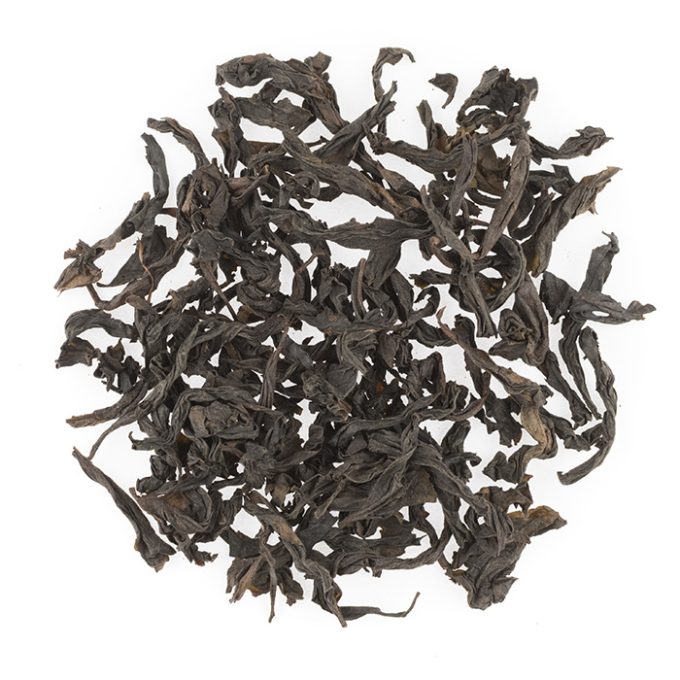
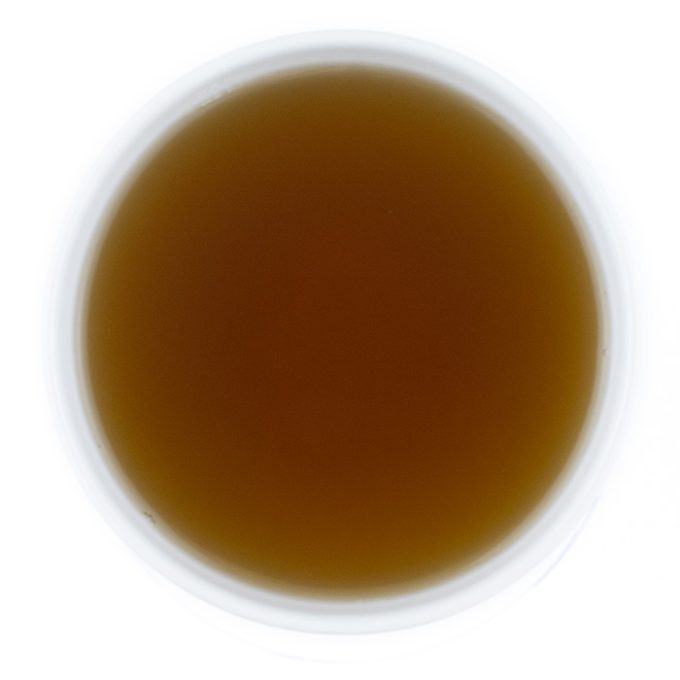
Use a small 150–200ml clay or Yixing teapot. A larger, roughly 200ml gaiwan also works well. We recommend preparing with 90–95°C water. Brew the first infusion for 15–20 seconds, then increase each subsequent infusion by 10 seconds. The resulting tea has a translucent, brownish-red liquor, with a honeyed-caramel, dried-fruit flavor and fresh black-tea notes.
Secret tip.
It also makes a pleasant drink prepared as a cold brew.
Preparation: Water: room-temperature water. Ratio: 1g tea leaves per 100ml water. Time: steep in the refrigerator for 12 hours.
Low in caffeine, naturally sweet, with pronounced honey and ripe fruit notes, and a refreshingly light finish.
History
From the 1950s to the 1970s, Taiwan flourished in the golden age of large-leaf black tea exports. Black tea became a symbol of the island’s integration into global trade. By the 1980s, however, cheap black teas from China, Vietnam, and Sri Lanka flooded the market, and Taiwan was unable to compete on price or scale. As exports collapsed, focus shifted to the domestic market. Taiwanese consumers came to prefer oolong, and Taitung producers adapted by planting small-leaf varieties suited to lightly oxidized, fragrant oolong teas, sold locally under the regional “Fu-Lu Tea” brand name.
By the 1990s, however, high-mountain teas had grown in popularity. Consumers began seeking light, delicately aromatic, high-altitude teas. This became a disadvantage for Taitung: Luye sits at only 200–350 meters above sea level, far below the elevation of Lishan or Fushoushan, and its oolongs could not compete with those from Pinglin. Market share declined, and tea cultivation shrank to under 100 hectares.
As Taitung’s tea plantations nearly disappeared entirely, the Eastern Branch of the Tea and Beverage Research Station (TBRS) stepped in to save the struggling industry. Studying the region’s tropical climate, acidic soils, and low rainfall, researchers worked together with tea masters and growers to develop a new approach: extended withering, intensive rolling, and deep roasting. In 2008, under the direction of station chief Wu Sheng-Shun, the method was formalized, and the tea was named Red Oolong.
Red oolong tea gave the Taitung tea-growing region a new identity. It does not seek the floral aroma of high-mountain teas, nor the astringent taste of traditional black teas. Instead, its hallmark lies in sweetness and roundness. Red oolong tea set out to challenge the old assumption that “fine tea cannot be grown at low elevations.”
A defining trait of red oolong is its long withering process, which naturally strengthens resistance to pests. When the small green leafhopper nibbles the leaves, it enhances the tea with a distinctive honey aroma. Because of this resistance, most Taitung farmers use organic or environmentally friendly methods. Today, more than half of the region’s tea gardens are managed this way, making Taiwan one of the most environmentally friendly tea-growing regions. Beyond Luye, smaller plots can also be found in Chulu, Beinan, and Taimali. Red oolong tea is Taiwan’s first tea born from genuine collaboration between researchers, farmers, and tea masters. The withering, rolling, and roasting techniques were developed specifically for the Taitung growing region. This is not merely a continuation of tradition, but the beginning of a new chapter in Taiwanese tea history.
Related products
-

Tie Guan Yin oolong tea
2.340 Ft – 9.230 Ft -
Oriental Beauty Bai Hao oolong tea
4.500 Ft – 12.000 Ft -
Tung Ting Dong Ding oolong tea
4.560 Ft – 15.060 Ft -
Wu Long – Black Dragon Oolong tea
960 Ft – 5.350 Ft -
Ban Tian Yao oolong tea
1.980 Ft – 8.180 Ft -
Jin Xuan Milk oolong tea
2.350 Ft – 9.140 Ft -
Fenghuang Dan Cong oolong tea
3.480 Ft – 12.270 Ft






 No products in the cart.